The “I don’t know” Aastra: Moving From Confusion to Clarity
Take a test. Tally down during the day, how many times you say “I don’t know….”
Chances are that most of the time, you say ‘IDK’ (I Don’t Know), you actually do know. It’s just that, the thought of knowing comes with an added burden of taking a planned action, that makes this task of responding with a definite answer, all the more overwhelming.
What do you want to do in future? I’m not sure… I don’t know
Do you really like the job you are in? Ehh, I Don’t know, maybe?
Using IDK in our daily language has become more of a defense mechanism (Defense mechanisms are ways our mind protects us from feeling anxious or upset).
" Rather than committing to something, admitting to our true feelings, or giving a definite Yes or No, we would rather make use of the powerful IDK Aastra, to protect ourselves. "
How does the “I Don’t Know” Aastra work?
1. Saying IDK gives us the time to think clearly about things.
2. It gives us an easy way out of the situation, which can involve us making decisions.
3. It could actually be that we don’t know.
Bluffing the brain
While we say “IDK” consciously, because we feel that the answer is something that we don’t know of, but, in reality, it’s our unconscious and subconscious trying to fool our brain.
" The answer is there, the decision is made, but it’s all being blocked by the multiple layers of our mind. "
What are these multiple layers of the mind?
1. Choice Overload Due To Too Many Options
We live in a society that has given us the privilege to choose from 10,000+ different options. We are spoiled by choices, as one might say. Want to order a phone, you have N number of brands, N number of features, N number of colour options, and whatnot.
Who wouldn’t get confused?
The core of our society has become about having multiple options to choose from, so that we don’t feel like we have been put in a box. But what happens when we have too many options to choose from?
We get overwhelmed and face the “choice overload” (having too many options can lead to decision paralysis and dissatisfaction with choosing one over the other).
Eventually, using “IDK” as a shield to ward off those feelings of potential regret that might come with choosing one option over the other is what we know best.
" While having choices is generally considered a good thing, an excess can complicate the decision-making process. "
2. Fear of the actions that follow a decision
And while we do eventually make a decision, it’s hard for us to admit that we have made one. Why?
Because then it would entail us to take an action, which we all know how much of a task it actually is. For example, saying that you want to change your career is easier said than done.
Taking any action can be daunting. It might involve stepping out of our comfort zone, facing the unknown, or dealing with its consequences. Sometimes, it’s just easier to avoid all that by keeping our decision-making process vague and uncertain.
" While using the “IDK” Aastra gives that safety net on which you can fall back on, anytime during the day, we have to realise that it limits our growth and stops us from exploring new experiences… "
Lets See things differently
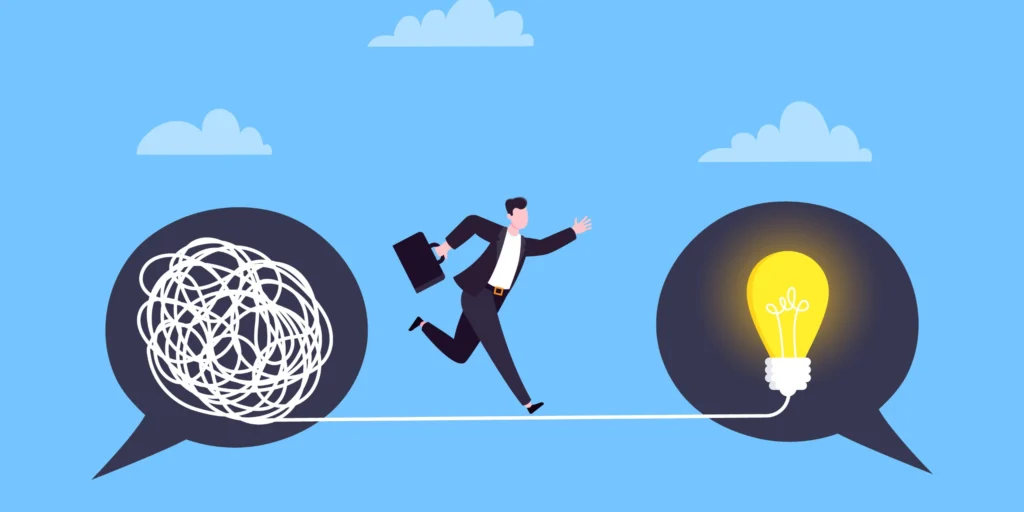
Instead of confusion directing our lives, let’s give it a shot at gaining clarity. This section gives you Questions to Ask and Actions to Do. Let’s see how this works…
Choose 1 particular area of your life where confusion is highly dominating your decisions. You could also make use of the tally that was mentioned in the start of the blog…
" It’s time to step out of our comfort zones and discover what we’re truly capable of… "
Why Rhythm-Based Work Isn’t a Hack — It’s a Strategy
This isn’t just a productivity “tip.” It’s a fundamental shift in how we approach work. By aligning your tasks with your brain’s natural rhythm, you:
Lower stress and risk of burnout
Improve focus, memory, and creativity
Make better decisions
Achieve sustainable, high-quality output
The secret to lasting productivity isn’t about working longer hours or perfecting your to-do list. It’s about respecting the way your brain is wired to work. When you do, work transitions from feeling like a battle to a state of flow.